
PHENTrials Blog

Understanding the EvoPAR-Prostate02 Clinical Trial
Fireside Chat: New Treatment Options for High-Risk Prostate Cancer Webinar Recap: BRCA Testing, PARP Inhibitors, and the EvoPAR-Prostate02 Clinical Trial This webinar focused on men with high-risk prostate cancer and a clinical trial called EvoPAR-Prostate02. The...

LIVE Fireside Chat: Clinical Trial Options for Advanced Prostate Cancer
The Omaha-003 clinical trial is for participants who have metastatic castration-resistant prostate cancer (mCRPC) and have failed to respond to drugs or surgery to block the testes from making hormones, and after treatment with other drugs for prostate cancer. The...

Facing Prostate Cancer Again? Watch this Replay!
For many prostate cancer survivors and their families, those words bring fear, uncertainty, and difficult decisions. In this month’s Managing Survivorship recap, “What to Do When Prostate Cancer Returns,” Mark Pomerantz, MD, Medical Oncologist, Dana-Farber Cancer...

Targeting Hormone Production in Prostate Cancer: How it Could Impact your Treatment
When someone hears the words “you have prostate cancer,” one of the first questions that follows is often, “What are my treatment options?” Advances in prostate cancer research continue to give doctors new ways to slow the disease and help patients live longer,...
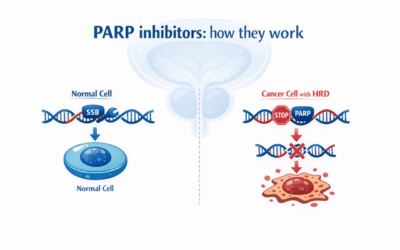
The Role of PARP Inhibitors in Prostate Cancer Management
What Are PARP Inhibitors? PARP inhibitors (often called PARPi) are cancer medicines you take as pills. PARP is a protein your cells use to fix small breaks in their DNA. PARP inhibitors block this repair process. When cancer cells can’t fix their DNA damage, they may...
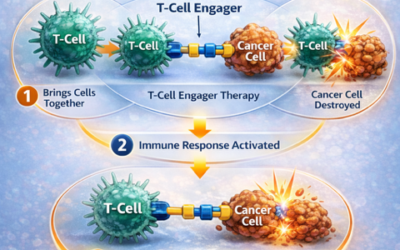
T-Cell Engager Therapy for Prostate Cancer: An Easy-to-Understand Guide
Prostate cancer is often treatable. Many people do well with surgery, radiation, or hormone therapy. However, sometimes the cancer comes back. Sometimes it spreads to other parts of the body. When that happens, doctors and researchers look for new options. One option...
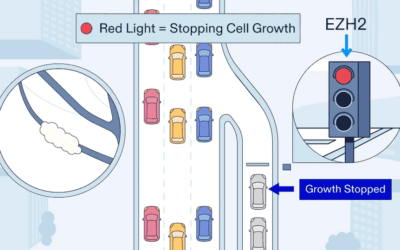
The Role of Epigenetics in Prostate Cancer: Key Facts for Men
Epigenetics refers to how the body turns genes on or off without changing the DNA itself. Think of DNA as a cookbook: cancer doesn’t rewrite the recipes—it adds “sticky notes” telling cells which pages to use or ignore. These epigenetic notes act like switches. In...

Immuno-Oncology: The Next Step in Care for Men Living with Prostate Cancer
Watch Now on PHEN TV Immuno-oncology is transforming how doctors treat prostate cancer — and giving men living with the disease new hope. In this PHEN TV program, experts explain how immunotherapies work by helping your body’s immune system find and destroy prostate...
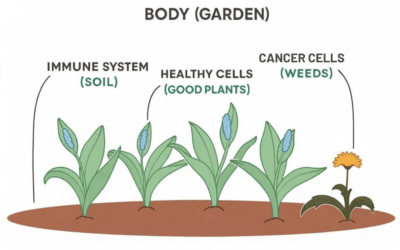
Realizing the Benefits of Immunotherapy Treatment for Black Prostate Cancer Patients
Black men with advanced prostate cancer have a greater chance of survival after immunotherapy treatment, according to a Duke Cancer Institute study. While several immunotherapy treatments for multiple myeloma and other hematologic cancers are now standard of care,...
Understanding EZH2 Clinical Trials for Metastatic Castration-Resistant Prostate Cancer
PHEN Clinical Trials Learning Session Presented in Collaboration with Pfizer The Prostate Health Education Network (PHEN), in collaboration with Pfizer, recently hosted a Clinical Trials Learning Session focused on emerging research in metastatic castration-resistant...

Beyond the Clinical Trial: What Real World Evidence Means for Your Prostate Cancer Journey
On Wednesday, May 14, 2025, the PHEN Managing Prostate Cancer Survivorship Meeting and Webinar featured a fireside chat with Dr. Sabree Burbage, PharmD, MPH, Associate Director of RWE in S/T Oncology at Johnson & Johnson, and Dr. Keith Crawford, MD, PhD, Director...

The MEVPRO Clinical Trials: What You Need to Know
The MEVPRO clinical trial program is an investigational prostate cancer treatment option for patients with metastatic prostate cancer. These clinical trials provide patients with the study medicine Mevrometostat, which is taken as tablets twice per day with...

AUA’s Urology Practice Publishes PHEN’s Peer-Reviewed Study: Black Men Not Being Asked to Participate in Prostate Cancer Clinical Trials
The Prostate Health Education Network (PHEN), an organization with a mission to eliminate the African American prostate cancer disparity, announced that its peer-reviewed manuscript titled Identification of Factors Affecting the Accrual of Black Males Into Prostate...

Tools to Support Your Prostate Cancer Journey
The Prostate Health Education Network (PHEN) hosted a Managing Prostate Cancer Survivorship Meeting and Webinar on January 14, 2026, bringing together patients, caregivers, advocates, and healthcare professionals for an educational discussion focused on informed...
Managing Survivorship Meeting: The Find Your Trial (FYT) Tool Increases Access to Prostate Cancer Clinical Trials
On Wednesday, December 11, 2024, PHEN held a hybrid Managing Survivorship Meeting and Webinar at the Dana-Farber Cancer Institute called Expanding Access to Prostate Cancer Clinical Trials: Introducing the Enhanced “Find Your Trial” (FYT) Tool. PHEN Director of...
This information is for educational purposes only and not intended as medical advice.
Patients should consult their medical doctor for advice and recommendations about specific clinical trials.