

When someone hears the words “you have prostate cancer,” one of the first questions that follows is often, “What are my treatment options?” Advances in prostate cancer research continue to give doctors new ways to slow the disease and help patients live longer, healthier lives. One area gaining attention focuses on hormones and the role they play in fueling prostate cancer growth. Scientists are now studying a promising treatment approach involving CYP11A1 inhibitors, which may help block the signals that prostate cancer cells depend on to grow.
The Role of Hormones in Prostate Cancer Growth
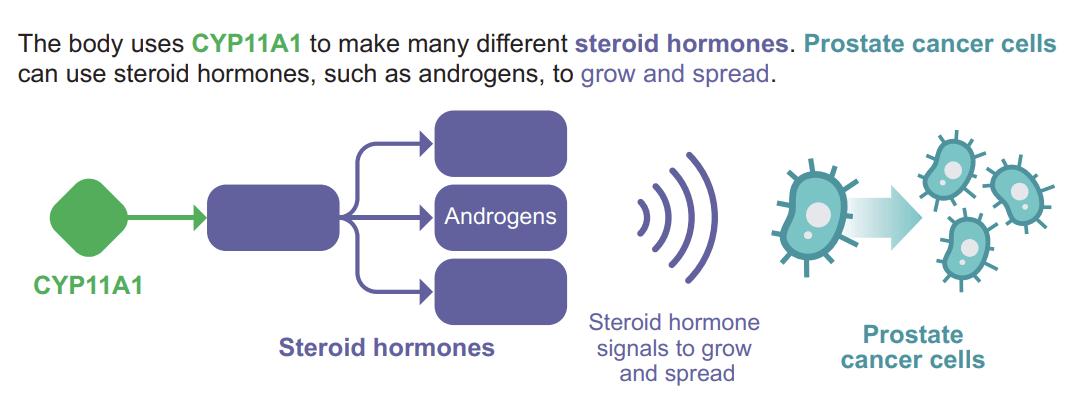
To understand why this matters, it helps to look at how prostate cancer grows. Many prostate cancers rely on steroid hormones, especially androgens like testosterone, to grow and spread. These hormones activate the androgen receptor (AR) signaling pathway, which can drive disease progression. Researchers have identified CYP11A1, an enzyme involved in steroid hormone production, as an important starting point in this process. CYP11A1 plays a key role because it performs the first step in producing steroid hormones, converting cholesterol into pregnenolone, a building block used to create several hormones that can fuel prostate cancer growth.
Why Researchers Are Studying CYP11A1 Inhibitors
Because this enzyme sits at the beginning of the hormone-production pathway, blocking it may reduce the production of multiple hormones at once.
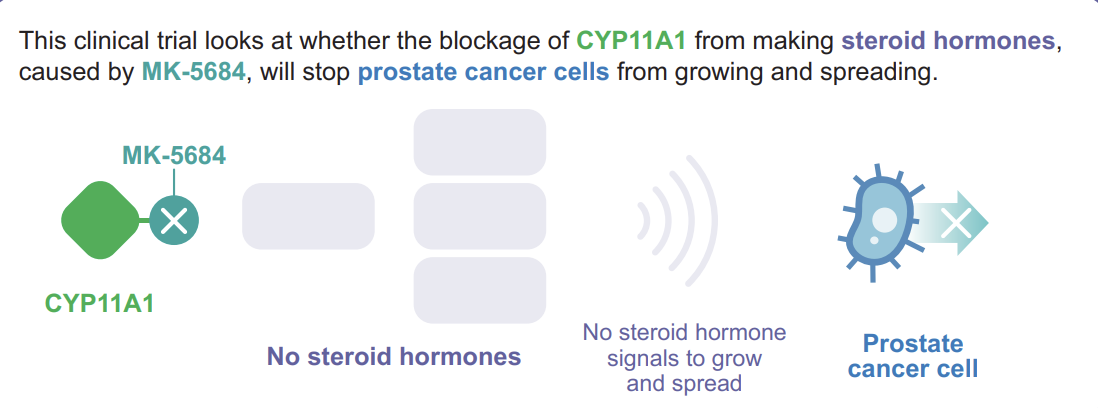
This is where CYP11A1 inhibitors may help. By slowing or blocking this enzyme, these treatments could reduce hormone levels and limit the signals prostate cancer tumors use to grow. Researchers believe this approach may strengthen current hormone therapies for prostate cancer and provide new options for men with advanced or treatment-resistant disease.
Clinical trials are now exploring how CYP11A1 inhibitors may fit into the future of prostate cancer care.
Clinical Trials Spotlight
Metastatic castration‑resistant prostate cancer (mCRPC) is a form of prostate cancer that has spread from your prostate to other parts of the body. Castration-resistant means that the cancer no longer responds to a medical or surgical treatment that lowers testosterone. Treatment options may include hormone therapy (treatment that stops hormones from helping cancer grow), chemotherapy, radiation therapy, targeted therapy (treatment that works on specific cells to stop them from growing) and clinical trials.
The goal of this clinical trial is to learn if the investigational trial drug, opevesostat, when taken with 2 hormone replacement drugs, is safe and may help to slow down or stop the growth of mCRPC.
>>For further information about MK-5684 (Omaha-004) clinical trial click here.
More PHENTrials.com Clinical Trials

ProsACT
The study is being conducted in patients with metastatic castration-resistant prostate cancer (mCRPC) that expresses PSMA and has progressed despite prior treatment with hormone therapy.

I-DXd
This is a study testing the antibody-drug conjugate (ADC) known as I-DXd. The participants who are eligible for this trial have advanced prostate cancer that became worse on androgen deprivation therapy (ADT) among other eligibility criteria.
Legion 100
The Legion-100 trial is evaluating an investigational treatment called SYNC-T Therapy SV-102 in men with advanced prostate cancer that no longer reacts to hormone therapy. This is a combined drug-and-device procedure performed with imaging guidance.